I want to be a teacher. What do I need to know?

Pretty much teaching is more than just teaching. I can give you a rather long list of what teachers do on a daily basis from educator to social worker, from nurse to psychologist and beyond. That aside let’s focus this post on the qualities and special skills that teachers need to bring.

Let’s begin with fostering a positive learning environment. I’ve written about positive classrooms before, but essentially it is about making everyone feel safe and secure as a person and a learner. How might we foster such an ambience in our classrooms and out? Learning their names is a great start, as well as knowing something about them, their likes, dislikes, favourite team, favourite game, favourite person. Always having a smile and ‘how are you today?’ ready to go, and meaning it, every time is great too. To be a teacher you have to love kids, AND love learning. A love of learning is contagious and will soon have them running to your class. 

Next, there has to be an understanding of child development. Being au fait with some of the theories is useful, but only if you can put it into practice, for your students. This will vary depending on your students; who they are, where they are, how old they are. For example, there’s Piaget’s Theory of Cognitive Development, in contrast we have Vygotsky’s Theory of Cognitive Development in Social Relationships and then there’s the 8 Stages of Development by Erik Erikson. There are many more, of course, but I’ll leave that to you to investigate further. 

Further, there are the all important students’ learning preferences and how to coordinate and differentiate the learning. What kinds of teaching and learning strategies will you use? What’s worked before? What hasn’t? Why? Further, teachers need to have subject matter expertise which varies depending on whether you are in early childhood, primary or secondary schools.You’ve probably heard someone, sometime say, ‘primary teachers teach children, secondary school teachers teach subjects’ – NOPE! NOT TRUE! We ALL teach children, some of us also teach adults. Yes, we need to have subject expertise but we also need to be open to learning about everything but most especially learning your students. It’s not always about the content.

Finally, strong communication skills are a must as is effective classroom management. I don’t just mean keeping them in line but rather, back to my first point, fostering a positive learning environment, knowing our students, empathising with them, communicating and understanding their needs. Theories are great, but practice is better. 

Jo Prestia

Believe this and teaching will be much more engaging and rewarding.

What else do you think we should know? Please comment below, share your thoughts. 

Thanks for reading 🙂

What is teaching ready?

Over the last few weeks I’ve been marking Teaching Performance Assessments (TPA) submitted by my 4th year pre-service teachers (PSTs). I have to say nothing in marking has given me more pleasure than reading and assessing PART 1 where they share their context, student group, lesson plans and mentor feedback, and write about their experiences on placement, and what this may mean for their future learning. In a few weeks this latest group of PSTs will complete their studies and hopefully most of them will be out there making a difference to children’s lives.

Every TPA I read was unique, every student had their own way to present and every subject & topic was different. I was enthralled with some of the strategies they used to engage the students from primary, secondary, international, and special schools. This cohort of PSTs are what the Chief Examiner calls ‘bipedagogical.’ They have experienced both face to face and online teaching (no need to explain why). They have experienced the same trials and tribulations as many of my colleagues, moving from one to the other sometimes within hours due to sudden lockdowns. It got me thinking…

The ‘bipedagogical’ teacher

What does it mean to be teaching ready?

Lots and lots and lots of hard work.

Today, it’s not just about the subject or unit you’re teaching. Expertise in these areas is, of course, important but before you get to share this, it is imperative to establish a safe and secure learning environment where you can build relationships with students and understand the contexts from which they come. I’ve shared some ideas about building relationships before here and here. My PSTs on the whole recognised how context affects learning. It means you need to prepare and cater for a diverse range of learners, your learners, in this classroom or in this learning space. It’s pretty daunting coming into an online space with a group of students you’ve never met before from a school you may or may not have visited in person and work with a mentor whom you’ve only recently met.

I often mention to my PSTs that they need to always be carrying a great big bag around (metaphorically of course – as we teachers know, we already have enough ‘stuff’ to cart around), which they can fill with strategies for teaching, learning and reflecting. Every time they see, hear, feel and think of an idea they can use in teaching and learning, they have a place right there into which they store it for that off chance they just might need it in the future. And they will. Even I bagged a few new ones for myself as I was reading through their TPAs. 

The strategy bag

Though these strategies might already be in that bag, somewhere, I might not have used them in a while, or it might be that my PSTs thought about it differently or presented it more creatively than I have thought to do. 

I wanted to share just two that I really liked. 

The first is around questioning for feedback. Think about how you ask your students if they had enough time to finish their task and the connotation that has on them as a learner. “Have YOU had enough time? This type of question might make them feel inadequate or slow if they haven’t completed the task. But what if we turned the question on its head? 

“Have I given you enough time?” What does this question say to our learners now?

The second strategy is an ICT tool called ‘Pear Deck’. Have you heard of it? I hadn’t but it sounded good, so I looked it up. The tech allows you to turn presentation slides like PPTs into interactive activities for your students or anyone else for that matter, so they can actively engage with the learning. Here are 20 ways to use it. My PST used it in his Year 10 English class to have students work as a group or individually at their own pace, responding to questions. Their responses come to your screen where you can give immediate feedback, and can also be shared anonymously on the slide projector for the whole class to discuss.

So, what is teaching ready? Well, for me there’s a list;

  • it’s building relationships,
  • being reflective
  • understanding context,
  • learning how students engage,
  • having expertise in your teaching areas,
  • planning explicitly for teaching and learning
  • understanding how to give and receive feedback for learning,
  • be willing to learn things yourself and …
  • loving it all!

Thanks for reading 🙂


The pendulum

Prompt 13 in #edublogsclub challenge is the pendulum.

Over the last 30 years as an educator, I’ve seen many changes. That my friends, as you have heard before, is the only constant in education – CHANGE.

In the prompt, there is talk about learning styles -the fact that for many, many years we were told that this was the way to go – teach to the learning styles of students. Well, research now suggests that this isn’t the case and that in fact teaching to learning styles has not increased student achievement.

Now what?

I remember when I first read about it, I was devastated. But then I realised that what they were negating was not in fact what we first thought -or at least not what I first thought. You see I’ve been doing a lot of work in this area for many, many years and developed a program about learning styles that my colleagues and I implemented in schools.

The whole idea of research that debunked learning styles mainly talks about pigeon-holing students into one way of learning and allowing them to think that if teaching is delivered in this way they will learn. That was never the objective of my program. Rather, the idea was that students could learn to learn using their preference but then they would need to be challenged to explore different ways of learning, depending on the situation. This point was never fully understood with those in management positions. This was a most frustrating predicament, even the students with whom we were working understood the concept:

“I think overall learning styles is really helpful because you know how you prefer to learn and it really helps. I don’t think there is anything negative about learning styles because some people may have lots of trouble at school and maybe that is only because of the way they learn. I have learnt how to adapt to different ways of learning. It has really helped me.” (Yr 7 student)

via GIPHY

Everyone learns in different ways. This is a given. For me, it’s still about getting to know your students, only I challenge educators to go one step further: Learn them.

So, while in education, things are constantly changing, as educators we still need to think about how, what and why we teach but more importantly WHO we teach. Learning them is a requirement in my book, no matter which way the pendulum swings.

Thanks for reading 🙂

Do more than ‘know your students’: Learn them

I’d like to propose a leveling up from ‘knowing’ your students to ‘learning your students’.

So how’s it different?

It is similar to holistic education where the student has the possibility to be developed in all aspects of humanism. It develops their physical, academic, spiritual, social and emotional being. In ‘learning’ students then, it becomes an ability to really know them beyond what they like to do, how they learn and what they got on their last test result. It’s about being open, allowing them to develop, take risks and all the while the teacher is watching, listening and learning. Only after this can one act accordingly. In learning students, one is compelled to take action.

What are the steps in such a proposal?

  1. When greeting them at the door go one step further beyond asking how they are going. Watch their body language, listen to the tone in their voice and distinguish if it was any different last time you asked. Then act.

    Watch, listen & learn

    Watch, listen & learn

  2. Reflect on the last class you taught. Who are the students that made an impact -that is- asked the questions, interacted with the teaching and learning, those you had to remind to get back on task. Now, picture those who did not. Why not? Have they interacted more effectively in previous classes? What was different this time? How can that change for next time without making them feel exposed? Now act.

    Classroom interactions

    Classroom interactions

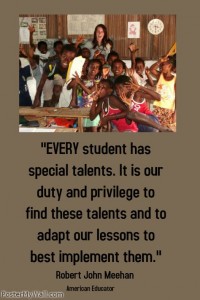
  3. Do you know what your students like doing outside of class? Do you make efforts sometimes to include aspects of these things in the teaching and learning? Let me give you an example: You asked your class and this particular one has quite a few that enjoy sports -don’t roll your eyes – I’m not keen on it either but just bear with me. Keep in mind while you do plan that there are undoubtedly some students who do not like sport – but maybe they like games… what aspects of sport and games could be included in your class? I encourage you to think outside the box here, include ideas about skills- dependent on what year level they are: Might you include some healthy competition, or adding by goal points, even creating open-ended problems related to sport but reflective of the skills you require? Is there a story about sport/competition/achievement/training/teams you could use instead? Just because students like footy, doesn’t mean you have to ‘do’ and ‘talk’ footy. Perhaps you can cover their love of sport via other related means. Now act.

    talents

    Students’ talents

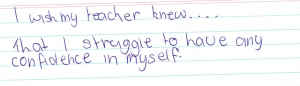
  4. Are you comfortable sharing something of yourself? Of course, I would expect that it be relative to the content matter being presented. This is a great way to reveal your own humanism and might move your students into telling some of their own narratives. Your role here is to model respect and trust when and if they do, to listen intently and thank them when they finish. Everyone needs to know they have a voice in your class when they want to use it and will be respected accordingly. One last point – the students don’t have to ‘talk’ their narratives, there are plenty of other ways to ‘show’ them. There might be an opportunity sometime during the semester to ask them to complete … ‘I wish my teacher knew …’ Now act.

    Lacking confidence

    Lacking confidence

  5. Stop teaching the content and start learning students. We are always talking about how we don’t have enough time…but time spent learning your students is much more valuable than always thinking you don’t have time because there’s so much content to get through. Content will happen, as will learning (which is the whole point of education) if we do more to ‘learn’ our students. Have open discussions about learning – discuss with them how they learn, talk about the brain and how clever it is and notice how, when, where and what students do in your class when you set learning tasks. I encourage you to change the language used – instead of asking them to get on with their work… try “let’s get on with our learning”. It just seems to be more inclusive and less burdensome somehow.


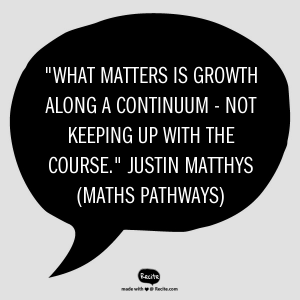
Matthys, 2016

Matthys, 2016

Now act. Let me know how it goes. Why not share your ideas below so others may also learn.


Thanks for reading 🙂

Eat in or take away? Day 1: Evidence Based Teaching Summit 2016

Last week I was invited to chair a panel discussion on policy and practice at the Informa summit on Evidence-Based Teaching and with that came the opportunity to attend two days of professional learning. I gained some wonderful insights and follow up for my own research, but I also came away with many more questions. You’ll see them filtered through the rest of the post.

Angela Carbone from Monash University opened proceedings delivering a keynote on the

What is student success?

What is student success?

resurgence of evidence-based teaching. She spoke of the need for evidence in order to ‘bust’ educational myths. To increase student success, we need valid, reliable, rigorous, accurate and timely evidence. But what is student success? What does it look like in the diverse classrooms of the 21st Century?

The second keynote was delivered by Dr. V. Darleen Opfer from the US. Teachers need to use a data driven approach in order to improve student learning but how do we support teachers to do this? Dr Opfer’s presentation was very practical and I could easily imagine her 5 recommendations working in our schools. She suggested:

  1. Making data an ongoing cycle using a variety of sources.
  2. Teaching students to examine their own data and set their own learning goals accordingly.
  3. Establishing a clear vision for the whole school.
  4. Providing the type of support that fosters a data-driven culture.
  5. Developing a data system that incorporates data from multiple sources.
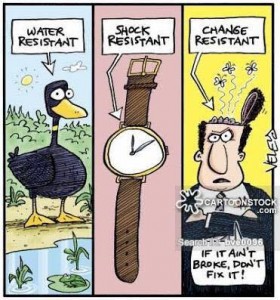
Change doesn't kill you...

Change doesn’t kill you…the difficulty is not in developing new ideas but in escaping from old ones  (reflections from case study on literacy program by Jeff Symms).

In making data an ongoing process teachers will need to be taught how to collect and analyse the data. This may be facilitated through the appointment of a data facilitator, who is not just a number cruncher but one who can organise, explain and disseminate the data. Teachers can then interpret, develop hypotheses and modify instruction to suit -well if they had time… .Dr Opfer advised that teachers collect a variety of data including classroom performance (formative assessment) regularly and to look for patterns.  Unfortunately, we don’t seem to have time and thus it often takes a back seat when in fact data should be out on the field, playing and contributing to the learning and teaching in schools. Hence the need for a data-driven approach to be established as a whole school endeavour.  What could we do without in order to make time for targeted professional learning, access to data and to developing a whole school culture?

The conversation continued in Chris Ramsden‘s presentation. He challenged educators to make a

Create the climate

Create the climate

difference and thought teachers need ‘actionable’ data that is tangible and accessible. He introduced the notion of practice-based evidence instead of evidence-based practice. Ramsden discussed the general capabilities and questioned whether they are indeed visible in the learning and teaching in schools. In making a difference do we challenge our students to persevere, to grow and be hopeful of the future? Are we arming them with strategies, modeling empathy and humility and displaying a growth mindset? After all, we do need our students to figure things out for themselves and hence the need to encourage risk-taking and the skills to deal with failure.

David Zyngier (Monash University) was up next to discuss the evidence on the issue of class sizes. Of course, there are many arguments for and against smaller class sizes. I’m sure most teachers would support having fewer students in their classes but what we don’t seem to understand is that reducing class sizes requires a different teaching approach, jut as lengthening or shortening periods in secondary schools require a change in mindset. Dr. Peggy Kern from the University of Melbourne and Janis Coffey from PESA presented arguments in separate presentations for positive education. To create ‘better’ learners said Kern, through a focus on positive psychology, a ‘thrive not just survive’ mentality of holistic education needs to be adopted in schools. With one in four young people diagnosed with a mental disorder and one in four teachers in Victoria suffering stress-related illnesses, Coffey believes that schools can make a big difference in this area.

A lively panel discussion with Kevin Donnelly, Peter Goss and Justin Mullaly followed provoked by my opening remarks:

Are policy and practice truly that separate and what role does research play in the scenario? In evidence-based teaching –what is the evidence on which we base our teaching? Does the evidence that tends to prove or disprove something become the basis of belief or disbelief? And what of belief, which is essentially an opinion or conviction, what role does it play in schools?

Can our judgements as educators be credible? Might the empirical evidence we see, hear and think emphasise a more informed approach to evidence-based teaching? In fact, can it be that instead of evidence-based we perhaps adopt an evidence-informed teaching practice?

As Dylan Wiliam suggested in 2015 “…the simple truth is that, in education, everything works somewhere and nothing works everywhere.” So are we to continuously believe the headlines we read – homework is bad, feedback is good, funding is not making a difference in our schools, or will we ever be able to make and follow through on our beliefs based on evidence-informed judgements? Are we to continuously answer to policy driven practice? What changes need to happen to successfully marry policy, practice, theory and experience in education AND have it truly enhance this highly complex and multifaceted notion of effective pedagogy?

Again and again the importance of giving time to educators so they can collaborate, attend PD, collect and analyse data. Here the implementation gap between policy and practice appears. There is no one answer, yet I think we all agree that evidence of student progress is required to inform practice and influence what teachers do. Justin Matthys (Maths Pathways) uttered one of my favourite lines of the first day “What matters is growth along a continuum – not keeping up with the course.” I wish more teachers would take heed of this advice.
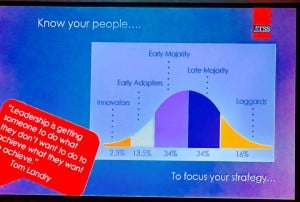
Know your staff...

Know your staff…

I have always maintained that to ‘learn’ your students is a most effective way to assist them in their own learning and to experience ‘success’. The same can also be said in this final message visualised here in a slide presented by Jeff Symms: Know your staff…

End of the first day.

Thanks for reading 🙂

Day 2 reflections here